

Crackled Bread: Harper Lee’s Latest Book is Half-Baked
A Review of Harper Lee's posthumously published, "The Land of Sweet Forever"

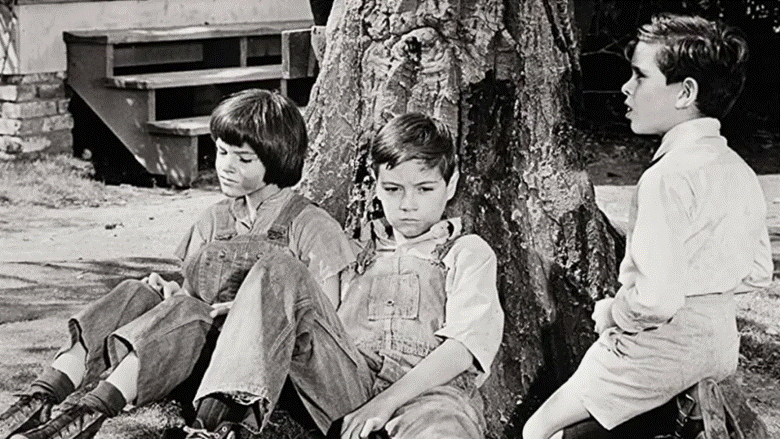
“Remember this also: it’s always easy to look back and see what we were, yesterday, ten years ago. It is hard to see what we are.”
—Jack Finch1
For the vast majority of Harper Lee’s lifetime, To Kill a Mockingbird was her sole published volume—her magnum opus. The novel became Lee’s identity. That’s about all that she was known for.
That’s not to say Lee is without other publishing credits. During her lifetime, she published essays in outlets such as The Oprah Magazine and Vogue. However, Lee’s first novel remained her sole foray into published fiction for over fifty years. That all changed in the early 2010s.
In 2011, the manuscript for yet another novel was discovered among Lee’s assets in Monroeville, Alabama. This manuscript was entitled Go Set a Watchman. It followed To Kill a Mockingbird’s protagonist, Scout Finch, as she—now an adult—returns to Maycomb, Alabama, grappling with how her childhood home has changed as the country shifted around it.
The original manuscript, completed in the 1950s alongside To Kill a Mockingbird, was thought to have been lost. With the rediscovery of Go Set a Watchman, the discussion around the aging author’s legacy began to take a new shape.
The manuscript was passed through several hands, and on July 14, 2015, Go Set a Watchman was published by HarperCollins in the United States and Heinemann in the United Kingdom.
Go Set a Watchman would go on to enjoy major commercial success, which Lee would tragically have little time to enjoy. On February 16, 2016, just seven months after the release of Go Set a Watchman, Harper Lee passed away in her hometown of Monroeville, Alabama.
Lee holds a spot in American literary history. Her novels tactfully address the culture of the American South, its history of racism, and its resistance to the historical headwinds of the 1950s and 1960s.
Through the character of Scout Finch, Lee provides a progressive lens that runs counter to the white Southern culture fostered in the post-Civil War and Jim Crow years. To Kill a Mockingbird has been praised for this perspective for decades. Though some characterizations in the sequel diminish the moral image of one of Lee’s most prominent characters2, Go Set a Watchman takes this message further in a way that is both forward-looking and yet doesn’t outshine its predecessor.
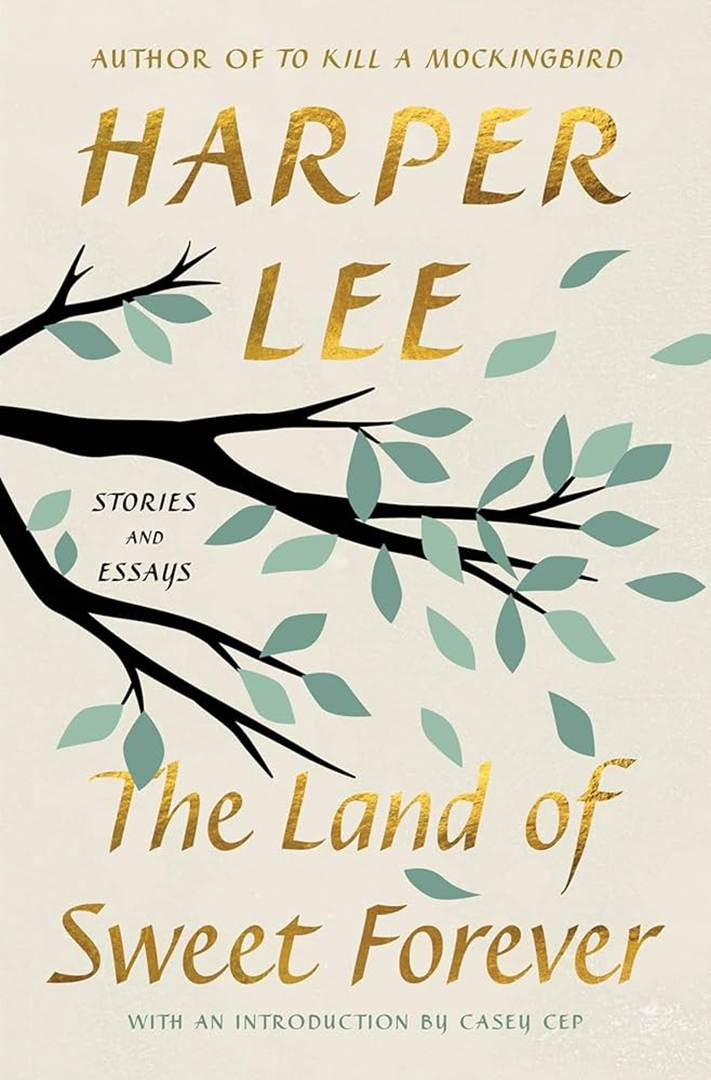
Such was the state of Harper Lee’s legacy since 2015. So imagine my shock when I encountered her name yet again, nine years later, on the cover of yet another book.
“There’s a land beyond the river. […]
That we call the sweet forever. […]
And we only reach that shore by faith’s decree. […]
Jubilee, […] In that far-off sweet forever, just beyond the shining river.”
—Zeebo3
This is not another lost novel. This is no continuation of Scout Finch’s story. No, in many ways, The Land of Sweet Forever is not entirely either of those things. It, both structurally and substantively, is half of what it promises. Half short stories; half essays. Half unpublished; half out of print. Half seemingly new; half glaringly familiar.
The Land of Sweet Forever is a posthumously published collection of eight previously published essays and eight formerly unpublished short stories.
Among the essays are an account of her experiences with Gregory Peck during the production of the To Kill a Mockingbird film adaptation and a recipe for crackling bread.4
The short stories of The Land of Sweet Forever play a prominent role in Lee’s creative writing career and are the main draw of the collection.
The brief narratives prompted two of Lee’s closest friends to fund all her living expenses so that she could pursue a full-time career as an author.5 But in reading these stories, another thing becomes quickly apparent: they are not just the beginning of Lee’s corpus; they are the explicit foundation of her two most prominent works.
In this volume’s introduction, Harper Lee biographer Casey Cep notes that a sizable portion of Lee’s short stories were later reworked into chapters or major plot points of both To Kill a Mockingbird and Go Set a Watchman.
The character we know as “Jean ‘Scout’ Louise Finch” first appears as “Jean Louie” in the story, “The Pinking Shears.”
The name “Louise” is used for another character in “The Water Tank.” In Go Set a Watchman, one of the subplots is Scout fearing that she may be pregnant, the defining plot line of “The Water Tank.”
In another plot thread utilized in Go Set a Watchman, the short story “The Cat’s Meow” sees the protagonist making their annual trip home to Maycomb, Alabama.
From character names to narrative threads, Lee was not shy about utilizing elements from her older fiction when writing her novels. There’s nothing to be ashamed of in this. Many writers reuse material from unpublished works in later projects. But when considered in conjunction with the rest of Lee’s published works, half of The Land of Sweet Forever lacks originality. And much of the remaining half is far from remarkable.
It doesn’t take a lot of persuasion to say that these story elements, which Lee sculpted and reworked for years, were ultimately perfected in the final novel manuscripts she produced. Which only begs the question: why subject the literary space and, particularly, fans of Lee’s work, to far inferior work that Lee herself never expressed any vocal interest in publishing as they were?
“To tell the truth—if I really wanted to know—they thought I had a great talent, and—[…] It was plain to anyone who knew me, they said, if anyone would stop to look.”
—Harper Lee6
Publishing a book after an author’s death is not a new thing. The act of posthumous publishing is a practice as old as the act of publishing itself.
Many of the greatest works of Western literature were published after the passing of their writers.
Anne Frank’s diary, published today as The Diary of a Young Girl, was preserved and later published by her father, Otto Frank, acting as the sole survivor of his family after the Holocaust. It is thanks to his efforts that the story of the Frank family is not lost to time. Anne’s diary has allowed the world to witness the horrors of the Holocaust through a child’s eyes. It has joined the works of Viktor Frankl, Elie Wiesel, and Primo Levi as some of the seminal first-hand accounts of the Holocaust.
American poet Emily Dickinson never once sought to publish her vast bibliography. Many of her poems were left unnamed. After her death, Dickinson’s loved ones uncovered her manuscripts and would later publish them in her name, exposing the world to one of the 19th Century’s greatest poets.
Cases such as these emerge throughout the course of literary history and will continue to do so.
There are also those who set out to write grandiose projects that they know they may not complete in their lifetime. In such cases, those authors may grant permission to their spouse or next of kin to finish where they left off. The most famous of such cases I can think of in recent decades is the completion of Robert Jordan’s The Wheel of Time series by sci-fi/fantasy author Brandon Sanderson.
As a rather morbid bit of speculation, many fans of the epic fantasy series, A Song of Ice and Fire, have wondered what would be the fate of their beloved series should its author, the presently 77-year-old George R. R. Martin, were to pass away before the completion of the series’ final two novels. Knowing the story of Robert Jordan, many fantasy readers speculated that Martin would wish to follow the same route. However, that may not be the case.
In 2013, Martin stated that neither he nor his wife would want another writer to finish A Song of Ice and Fire should he happen to pass away before its completion.7 While that may feel disappointing to fans of George R. R. Martin’s work, I think it’s important to acknowledge that a.) he’s still alive and is still actively working on his novels, and b.) even if he doesn’t finish them, it’s best to respect his wishes. We should not value the fruits of someone’s labor more than the life that produced them.
Some authors wish to have their unfinished works remain untouched when they die or, in some cases, be outright destroyed.
The late fantasy author Sir Terry Pratchett wished to have his unfinished works (and the hard drive they were stored on) run over by a steamroller—a wish which his estate happily fulfilled.8
To the extent that an author is able to while they are alive, they should have a say in how their work and legacy are remembered. Simply because a work is left unpublished during a person’s life doesn’t mean they’ll want those works published after their death.
In some cases, the unpublished works are deeply personal. Earlier this year, the largely unedited journal entries of Joan Didion were published posthumously by Knopf. The journal entries contain, among other things, extensive details about the late author’s therapeutic treatments.
The reception was stark. A post on The Guardian proclaims that the very act of publishing this volume is “an invasion of privacy.”9 Evelyn McDonnell, writing for Literary Hub, titled her review, ”Who Thought This Was a Good Idea?”10 And Alexandra Alter wrote in an article for The New York Times that Knopf and Didion’s estate were acting on the “impulses to put out every last scrap of a famous author’s work,” an activity that Didion herself disapproved of.
It is not only the fact that, in cases such as Didion’s, we are acting against the wishes of the author, but in publishing a work posthumously, we run the risk of putting into the world written work that was never meant to be seen in the form it was last left in.
Chapters could be cut. Characters could be reworked. Sentences could be rewritten. Or, in extreme cases, manuscripts could be thrown out entirely. What matters most is that the work the author wishes to see brought into the world is done so as they wish, not simply in a “good enough” format for publishers and estates to turn a profit on the careers these authors have cultivated during their lifetimes.
If the author explicitly does not want a given manuscript published, that should be the end of the discussion. In some cases, that wish may not be explicitly expressed and should be explored with care. But if we know their answer is no, then the final answer should be no. It is a shame how often we choose not to listen to the dead.
So where does that leave Harper Lee?
We cannot make assumptions about what Harper Lee would have wanted for the sixteen works included in The Land of Sweet Forever. The only one who’d know what she’d want with this collection—if she would’ve wanted it at all—would’ve been her.
I, personally, find The Land of Sweet Forever to be largely inconsequential to Lee’s legacy. Given that much of the fiction was reutilized for her major novels, and the once-published nonfiction largely leans towards autobiography11 rather than novelty, this collection is better suited as an archival piece than a major late-year book release. This is a book for biographers, not the average reader.12
Though I think Lee would be happy to know that decades after her first bestseller, she is continuing to make waves for book lovers around the world. The chance her Manhattan friends took on her gave her the literary life she’d always dreamed of. And even after she has passed on, she has millions of fans craving for more.
What more could any author wish for?
Socials:
Substack: whatsonmymind.net
Twitter: twitter.com/bryceallenreads
Threads: threads.net/@bryceallenreads
Glasp: glasp.co/#/bryceallen
For more articles on reading, writing, and the creative process, subscribe to my free Substack newsletter!
You can support my writing by buying me a coffee!
You can also show support by purchasing from the affiliate links in this article.
Sources:
Convery, Stephanie. “Terry Pratchett’s Unfinished Novels Destroyed by Steamroller.” The Guardian, August 30, 2017. https://www.theguardian.com/books/2017/aug/30/terry-pratchett-unfinished-novels-destroyed-streamroller.
Feigel, Lara. “Notes to John by Joan Didion Review – an Invasion of Privacy.” The Guardian, April 28, 2025. https://www.theguardian.com/books/2025/apr/28/notes-to-john-by-joan-didion-review-a-writer-on-the-couch.
Kovaleski, Serge F, and Alexandra Alter. “Harper Lee’s ‘Go Set a Watchman’ May Have Been Found Earlier Than Thought.” The New York Times, July 2, 2015. https://www.nytimes.com/2015/07/03/books/harper-lee-go-set-a-watchman-may-have-been-found-earlier-than-thought.html.
Lee, Harper. Go Set a Watchman. New York, New York, United States of America: HarperCollins, 2015.
Lee, Harper. The Land of Sweet Forever: Stories and Essays. New York, New York, United States of America: HarperCollins, 2024.
Lee, Harper. To Kill a Mockingbird. 1960. Reprint, New York, New York, United States of America: HarperCollins, 2002.
McDonnell, Evelyn. “Who Thought This Was a Good Idea? On Notes to John and The Selling of Didion’s Privacy.” Literary Hub, June 5, 2025. https://lithub.com/who-thought-this-was-a-good-idea-on-notes-to-john-and-the-selling-of-didions-privacy/.
Ross, Steven. “What If George RR Martin Dies before Finishing Winds of Winter? Plans for Book in Event of His Death Revealed.” National World, National World, March 3, 2024. https://www.nationalworld.com/culture/books/george-rr-martin-finishing-winds-of-winter-plans-book-event-his-death-4540935.
Lee, Go Set a Watchman, 269.
I personally don’t believe anyone who looked admirably at the Atticus Finch of To Kill a Mockingbird would find that same paragon of justice in the older Atticus Finch of Go Set a Watchman.
Lee, To Kill a Mockingbird, 138.
The recipe for crackling bread requires a living pig for you to replicate it with 100% accuracy. A unique novelty characteristic of the times and community she lived in.
An essay telling this story is included in this volume, titled “Christmas to Me.”
Lee, The Land of Sweet Forever, 147.
There are other accounts where Martin states that he’d consider leaving detailed notes behind. Ross, “What If George RR Martin Dies before Finishing Winds of Winter? Plans for Book in Event of His Death Revealed.”
Convery, “Terry Pratchett’s Unfinished Novels Destroyed by Steamroller.”
Feigel, “Notes to John by Joan Didion Review – an Invasion of Privacy.”
McDonnell, “Who Thought This Was a Good Idea? On Notes to John and The Selling of Didion’s Privacy.”
And this nonfiction has been regularly used for biographies of Harper Lee.
The latter would be better off reading To Kill a Mockingbird and Go Set a Watchman and leaving it at that.